 16°C |
Thursday October 15, 2026
16°C |
Thursday October 15, 2026 
18 December 2023
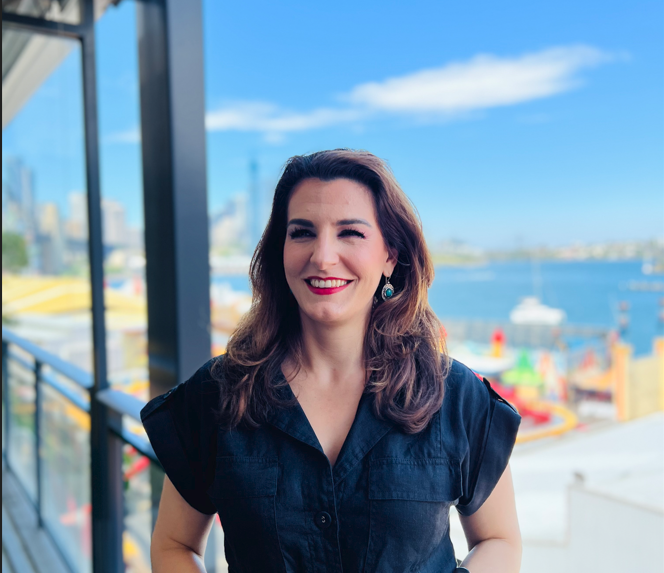
The Federal Liberals have wasted no time in their efforts to reclaim North Sydney in selecting the experienced lawyer and tech executive Gisele Kapterian as their candidate for an election which may not take place until 2025.
Kapterian is no stranger to federal politics, having served as a chief of staff to ministers under Tony Abbott and Malcolm Turnbull, but it’s her experiences outside politics that will make her candidacy one to watch as the next election grows closer. To beat independent Kylea Tink at the next election, Kapterian needs a three percent 2PP swing. But she also needs to overcome the goodwill that is being accrued by Tink in her first term, reflecting the legacy of Ted Mack who also gained a successful reelection as an independent to North Sydney on his second attempt in the early 1990s.
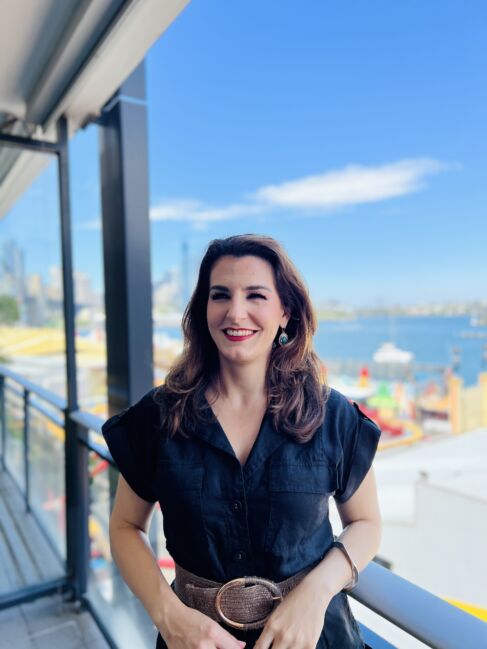
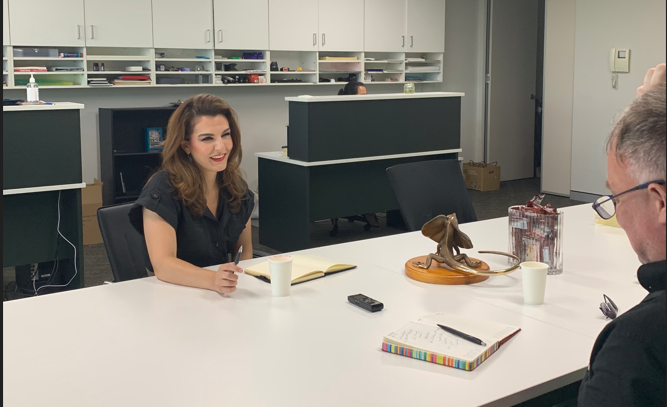
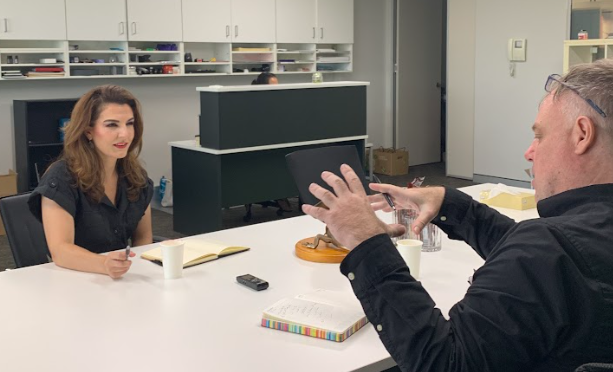
Kapterian spoke with North Sydney Sun’s Grahame Lynch in this exclusive interview.
Sun: The first question we always ask anyone who is a candidate is why do you want to run?
Kapterian: This has been something long-standing for me, and I think a lot of it comes from my own personal upbringing. My parents are migrants from Jerusalem and I’m part of the Australian Armenian community here. My family was very heavily involved, my grandfather is British, involved in the British Foreign Office. International politics has been something that was intimately integrated with our family’s story. Power structures and the people who make decisions that affect lives have always had a direct and very visible consequence on the direction my family’s life took. The idea of participating in that conversation was not a foreign one to me, because… the way my family’s story was intimately connected with that idea that, your life is affected by decisions of government.
My British grandfather’s travel around the world, he would stay no longer than two years in any one country. And doing so, with the idea that you must be there, you must participate, you must be present to shape an outcome. So the idea of civic participation was really present. My first job out of university I worked at the Supreme Court. I thought I was going to be a barrister. That’s where I thought I was going to shape the law after it had already been made. Then I went to the Horn of Africa at age 23.
Sun: Horn of Africa is Somalia?
Kapterian: Close. I was in Eritrea actually, and I worked on the Eritrea-Ethiopia Claims Commission, where Eritrea and Ethiopia were suing each other for breaches of the laws of war. First time in history, that they’d sought monetary damages for victims of soldiers who had transgressed the Geneva Convention. We are seeing the consequences of that around the world at the moment. I was there to help claim monetary damages for these people out in the middle of nowhere who had their last two goats taken from them. The way that they made money was taken from them by soldiers who had no regard for the rules of war.
I realised at that point, two things. One, in order for people to take you seriously at a negotiating table, you need the economic fundamentals of a nation to be strong, otherwise, you can’t negotiate for what it is that you and your country want. The second thing is, there is a limitation to being just the person who helps implement laws that have already been made, that is the role of a lawyer, which became a theme as I evolved through my legal career. Then I made that step into politics because I wanted to be creating that law rather than just interpreting it and applying it.
After Eritrea, I thought, well, international trade is where I want to be because I can help create those grounds for economic prosperity for nations if I get involved in that trade element. So I became an international trade lawyer, and I lived in London and Geneva. I worked at the World Trade Organisation for a while. I advised countries and companies around the world. The United States, European Union, Philippines, Saudi Arabia, you name it. I was involved in everything from subsidisation and anti-dumping, creating an equal playing field for products. And I had just come off a case just before my 31st birthday, thereabout, and I was sitting at home having a glass of wine in my pyjamas, and I had turned on the news, I’d been absent when you’re heavily involved in your case.
Sun: You don’t know what’s happening out in the world. You need to tune back in?
Kapterian: Correct. Exactly. Turned on the news and Bloomberg was on, it was one of the few English-speaking channels over in Geneva, and Julie Bishop was being interviewed. She was talking about Australia as a top 20 economy, and she was in opposition at the time, opposition spokesperson for foreign affairs and trade. And she was saying that Australia often talks about itself as a middle power, and she said, ‘I think we underplay ourselves. We are a top 20 economy. We are a G20 economy.’
Sun: Technically 16th.
Kapterian: Correct. Exactly. And what I loved about what she was articulating was the ambition of Australia, the understanding of not selling ourselves short of the amazing achievements and the great things that our country can do and does do. And that resonated with me as an Australian who’d been living overseas for a number of years at that point in time. You know what it’s like, you meet an Australian everywhere you go. You lift a rock, there’s an Australian in the most remote part of the world. And we are so well regarded around the world with great work ethic, we’re great thinkers. People like working with us. Hearing what she was saying there and coming back off the back of that experience, for me again, I had come off this case where it was madness to me, the way the decision was made in the final analysis against the Philippines, who I was representing at the time. And I thought, well, this is the thing, you’ve often been saying to yourself, there’s a problem with the implementation. It’s like when you go see a doctor. When you go see the doctor, you don’t want to see your doctor again too soon.
Same with your lawyer, you don’t want to see them too often. It’s always a problem. So wouldn’t it be better to shape the rules before they become law? I’ve been working in international trade for several years, I got a breadth of experience and I thought, “I want to contribute to my country.” So I came home, applied to work for Julie and she said, “We have nothing, we’re in opposition, but stay in touch.” And so I did. I got involved with the party. We won the 2013 election. Had the interview and got the dream job.
WORKING IN CANBERRA
Sun: So you worked for Julie Bishop in that first term of government?
Kapterian: Exactly. As foreign minister. Two and a half years.
Sun: What a great introduction to politics!
Kapterian: What a person to learn from, right? I think a lot of what happened then shaped me, and the issues we dealt with then are still shaping Australia. So we dealt with the annexation of Crimea, 2014. The downing of Malaysian Air Airlines flight MH17, and the setting up of the prosecution mechanism to hold those people to account. It was that time where the issues in the South China Sea had started developing. We were heavily involved, it was our time on the UN Security Council. The time I worked with Julie… I was with her when she buttonholed Putin, it was fantastic. These are the life lessons I saw which really vindicated my idea that this is where I wanted to be. My parents own a small business. I dealt with small business and big business. I dealt with governments and this was my opportunity to take that learning and apply it to shaping government and shaping the rules that affect everyday Australians for the better. I spent almost five years as a political staffer. I moved into international trade. I worked for Steven Ciobo for a while as well. That’s where we launched the beginnings of the UK Free Trade Agreement. The EU FTA was all done while I was there. We concluded the infamous TPP, Transpacific Partnership, which then became the CPTPP and I left just after the final negotiation and signing. And then spent a few months right at the end in Michaela Cash’s office. Right at the end and only a few months before there was another leadership spill.
Sun: So this takes us to the end of Malcolm Turnbull?
Kapterian: Yes, and I left with the end of Turnbull. And I made a beeline for Salesforce. (Kapterian is the Senior Director, Public Sector Strategy APAC at the firm, a US$250 billion tech giant that provides cloud solutions for enterprises and government)
JOINING THE TECH SECTOR
Sun: Yeah. Great company.
Kapterian: This is the thing I want to do; help deliver government services better. And part of that helps everybody do better. What we’ve seen is, politicians come and go with the election cycle, but the issues stay the same underneath with the bureaucracy. We’ve got a lot of talented people in there who just want to be able to do their job better than they can. But they need that private sector thinking to be applied to the public sector, in terms of resourcing, tooling, and skilling. And they’re able, at that point, to deliver better for citizens. So that’s what I’ve been doing for five years.
Sun: I just want to get a feel for your plans over the next, could be a year and a half to the election. So, are you going to stay at Salesforce right through, or are you going to take leave at some point, or…?
Kapterian: I think I have to take leave at some point.
Sun: Yeah. When you’ve got a better insight as to when the campaign will be, and so on.
Kapterian: That’s right. I’m very lucky that I work for a company that allows me to participate in this way and still be able to pay the mortgage.
CONNECTION TO NORTH SYDNEY
Sun: Well, that’s a good segue. Let’s talk about you and North Sydney. Do you live locally?
Kapterian: I do.
Sun: Tell us about your connection to the area.
Kapterian: Yeah. I am a Willoughby girl. First few years of my life.
Sun: Am I right that Gladys Berejiklian grew up in Willoughby or am I getting something wrong there?
Kapterian: No, I think she was also Willoughby, and then she moved to Ryde and then came back. My story is similar in that, started in Willoughby, and we moved to Forestville. And then I moved around the world, Canberra, and then came right back to Willoughby. Like a homing pigeon.
Sun: One of my best friends at high school was quite involved, right from a young age, in the Armenian community. At age 14, I knew all about the Armenian genocide because of him. And he went to Saturday school with Gladys. My sense was and is it is quite a community. I think I’ve got a bit of a sense of where you’re coming from there. It’s a really tight community.
Kapterian: I’m on the board of the Armenian National Committee. I’m heavily involved in my community here.
Sun: So you’re from Willoughby, you’ve obviously spent a lot of time overseas but you’re back now. What do you see as being the unique characteristics of this area that you would seek to represent?
Kapterian: I think it’s no secret that this is a very discerning electorate. The people of North Sydney are educated. They have a high regard for the betterment of life, I think. They’ve worked hard to get to where they are today. They are certainly the type of people that don’t shy away from entrepreneurialism. We’ve got the third-largest commercial district (of Sydney) in our electorate. And this is all about the true aspirational elements of Australia. Hard work, education, translating into the type of life that we would like to live. Not the one that we must live. And that choice is at the heart of the people who live in North Sydney. They get to exercise that choice. We live in a beautiful part of the world where it’s beautiful, green leafy suburbs. We have an appreciation of our natural surroundings and how that affects basic things like well-being and health. But know that our children need to work hard in order to get the jobs that will give them the stability and ability to continue to live that life of choice. I think these are the characteristics that define North Sydney. There’s also, wrapped around all of that, a great sense of understanding that we live in a more privileged part of the country and there’s a great sense of giving back and passing on that sentiment.
Sun: Like a sense of obligation?
Kapterian: That’s right. Exactly.
THE SUCCESS OF THE TEALS
Sun: Do you think that’s the thing that has driven the success of the Teals perhaps here because they speak directly to these types of sentiments?
Kapterian: Absolutely. And that’s where I think we need to, as a Liberal party, revert to leading with those values. I think that North Sydney is a very values-driven community. And if we lead with those values… If you read that We Believe statement from the Liberal Party, it is the foundational elements of every well-functioning liberal democracy, it’s inspiring stuff. It’s the things that you see. Thomas Jefferson and Teddy Roosevelt talk about. We’ve just forgotten to mention it in our commentary, but the people of North Sydney who have, often, been Liberal voters, clearly feel some connection with those values. I think that they need to see a greater alignment between the people and policy and those values again for the Liberal party to find themselves represented, chosen by the people of North Sydney once more.
Sun: Incumbents always have an advantage by being incumbents. Why do think you would make a better member than Kylea Tink and why doesn’t she deserve a second term?
Kapterian: I think I might take a different angle on that and say, I think that there is always going to be a greater value for an electorate in picking a candidate who can form part of government. I think that’s a bottom-line issue. Well, there’s always going to be a role for independents. I think that at the end of the day, this is the electorate that’s had treasurers and premiers and people who’ve been able to advance an agenda very much aligned with the people of North Sydney in government. And that’s what I think the people of North Sydney would want to see happen again at some point in the future.
Sun: So you’re steering very clear of criticising the person there. Is that deliberate?
Kapterian: Yes.
CHANGING BOUNDARIES
Sun: There’s uncertainty about the boundaries of North Sydney and it is possible it might not continue to exist. (Editor’s note: Under one possible scenario, the existing North Sydney electorate may be swallowed up by an expansion of Bradfield to its north and Warringah to its east) It might not be Kylea you run against?
Kapterian: It might not be Kylea. That’s right.
Sun: What’s the situation there? If the boundaries changed significantly in a radical sense, in that you got preselected by a certain bunch of people and half of them are no longer in the electorate, would you have to go back to a preselection or would there be a rethink of what you’re running for?
Kapterian: I think there would have to be. And to be clear, I haven’t spoken about this in detail in any formality with the party structures themselves. But I would say one of the greatest strengths of the party has been the democratic election of their representative first. It would seem to me that we would create unnecessary challenges for ourselves if we missed that step. And we saw what happened in 2022.
Sun: Well, this is part of the reason Scott Morrison lost, wasn’t it? Because so many candidates had limited time to get out there because they weren’t pre-selected until late. And even Trent Zimmerman, the former North Sydney Liberal MP, wasn’t formally pre-selected until six weeks out. So he couldn’t spend any party money on his campaign before that.
Kapterian: The 18-month leadup is always going to be a positive because people can see who you are, what you stand for, get to know you without the rush and the natural constraints that come with an election cycle and they get to know you for you.
THE NEXT 18 MONTHS
Sun: What do you intend to do over the next 18 months? What do you intend to do to get your name out there? What’s your plan?
Kapterian: Yeah. I’ve started a listening tour essentially. And the idea behind that probably is really… Again, getting back to basics, your representative needs to be your representative. They need to understand the sentiments of the community. And to some degree, I’ll break that down and say the sentiments within the many communities that make up North Sydney.
Sun: It’s not a monolithic community by any means.
Kapterian: That’s right. And finding the common themes that exist between all of those communities. We’ve done it many, many times before. There’s no reason why we can’t do that again, in terms of finding those common threads, the common values, the common priorities. So I’ve kicked off this listening tour. People would’ve seen me already standing on bus stops. I’m asking them, there’s a survey that people can fill out. I want them to let me know what they think, rather than me assume. That’s the worst thing I think that anyone can do when they’re trying to represent people, is assume what they think is of priority to them.
Sun: Now, Trent Zimmerman got beaten, but only narrowly, and there was always a sense that it was partly because of a tidal flow against Scott Morrison. We know some of the reasons, but some of the other reasons weren’t articulated. I talk to a lot of people, and one of the things that was really annoying people around here, back in that period, was the perception of the loss of the value of citizenship, because of the COVID restrictions and then travel restrictions. That specifically got the goat of a lot of people. Now, that wasn’t Zimmerman’s fault, but he bore the brunt of the reaction. Of course, some of these factors will diminish by next year. What do you feel will be the issues that will drive political sentiment in 12 to 18 months? What are we going to be talking about, not just as a nation, but as a community, in 18 months?
Kapterian: I think that we’re beginning to see the formation of that narrative already. We hear these issues about cost of living and I know a lot of people try and say, “North Sydney won’t be as affected as…” but I don’t think that that’s the assumption you can make. Because we all have to pay a mortgage, or pay the rent and buy food, to run a household or run a small business, we’re all affected by the same input.
Sun: Well, the business side of it particularly. Yeah. A lot of people here have elastic income because they’re running a business. For older people, maybe they’re living off dividends.
Kapterian: That’s exactly right. I reject that sentiment completely. I think that it is a cost-of-living challenge. I think that there is a great sense that the housing crisis will be felt here. And I say that from several angles. Yes, there are a number of Gen Zs and millennials who are trying to buy close to their families. A lot of people who are my age are starting families themselves but feel that they can only do so if they’re located near a grandparent who can help out. Grandparents or parents now who want to help the next generation get on that housing ladder, and they can’t because they don’t have access to their own disposable income in the amounts they would, the superannuation caps on how much you can take from your super and give to the next generation, and those kinds of things.
A lot of restrictions are stopping people from making the choices that they might otherwise make, to help the next generation, themselves, or the generation before, as parents age and need further assistance. The people of North Sydney have got great sense of community, great sense of family. Housing is a key part of that dynamic. Plays into all of those elements, from childcare right the way through to aged care. So I do believe that the housing issue is an issue of significance for the people of North Sydney.
Sun: In a sense, like your personal story. It’s almost an archetype of what a lot of people around here are about. You grew up around here, you’ve got your career going, you went out into the world as a lot of people do, and then later in life, come back and want to replant roots here. But that said there’s a re-entry cost and that’s a high cost now. If you were to become the member, how would your approach differ to what Kylea Tink is doing now?
Kapterian: If you are fortunate enough to have the people of North Sydney elect you, you will already have an ability to deliver with impact. And I think that’s the defining element. I think a lot of people understand that there’s a lot of people who go into politics with great intentions. Their ability to deliver impact is what will be the key to their longevity. And there is a natural advantage of being a part of a party system to be able to do that. If you’re able to win government then as the people of North Sydney have seen on countless occasions previously, in an 80-year history or so, that’s really where the dividends have paid off in their investment in their candidate. And of course, as I said earlier, there is always a role, I think, for independents in shining a spotlight on themes or issues and I think she is very much a product of that moment. And if the major parties look at those themes and that sentiment, they can translate that into a broader, so say, “Okay, I hear that that’s been an issue, but it’s a more of a singular issue or a couple of issues that we know are important to the electorate. We’ve heard that now. Let’s translate that into something that has an impact.” Translate into good policy so people can see what those policies can look like when being translated into good legislation, and good regulation, and then vote on that.