 20°C |
Monday November 2, 2026

2 November 2026
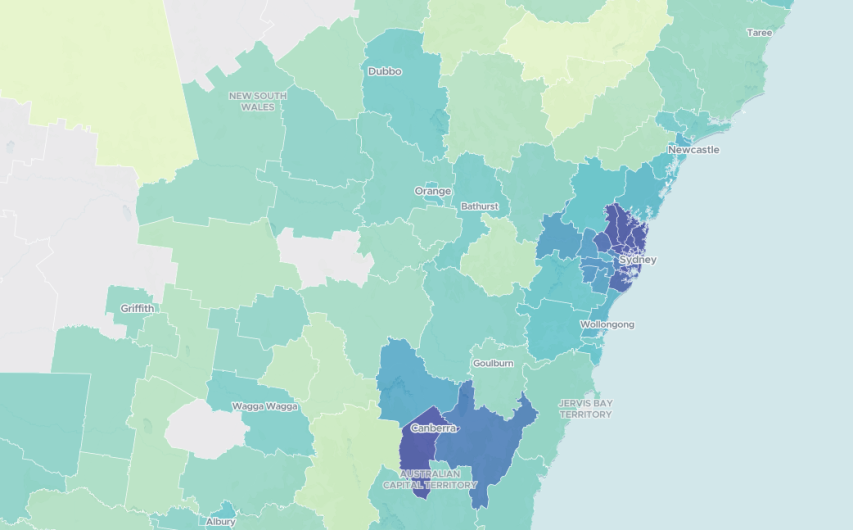
North Sydney appears to be the most exposed local government area in metropolitan Sydney to workplace disruption from artificial intelligence, with almost half of the tasks performed by its workers potentially subject to automation.
New research by economic consultancy SGS Economics and Planning, which measured exposure to AI automation across every local government area in Australia, found that 45.3% of tasks performed by people working in North Sydney were exposed to automation.
The figure covers 80,632 workers employed in the municipality, including the North Sydney CBD, St Leonards, Crows Nest and surrounding suburbs.
Residents are similarly exposed, with 43.4% of work tasks performed by the area’s 41,090 employed residents potentially affected by AI.
An examination of the national mapping published by SGS suggests North Sydney has the highest workplace exposure score of any Sydney local government area, reflecting its concentration of finance, technology, legal, consulting and other professional services employment.
The research, published on 1 November, was undertaken by SGS Economics and Planning principal and partner Alison Holloway and senior consultant Jayden Perry.
The researchers combined occupational exposure scores developed by Jobs and Skills Australia with employment and residential data from the 2021 Census, calculating exposure separately for people working in each municipality and those living there.
Their findings suggest the next wave of technological disruption will fall heavily on professional employment centres, reversing the pattern of earlier industrial changes that disproportionately affected manufacturing and regional communities.
“This new disruption looks set to concentrate instead in the professional heart of our cities,” the researchers wrote.
AI systems are increasingly capable of undertaking cognitive work, including research, analysis, document preparation and administration traditionally performed by skilled professionals.
However, the researchers cautioned that exposure to automation did not mean an equivalent proportion of jobs would disappear. The figures indicate how much work could change as AI becomes more widely adopted.
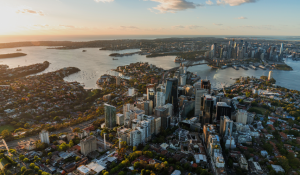
For North Sydney, the implications extend beyond employment prospects.
The municipality has invested heavily in its role as a commercial centre, supported by high-rise office development, Sydney Metro and the continuing redevelopment of the North Sydney and St Leonards business districts.
Changes in the number of office workers required by major employers could affect demand for commercial floorspace, public transport, hospitality and businesses dependent on the daytime workforce.
SGS said planning authorities needed to consider how AI could change commercial centres, including requirements for adaptable buildings, different employment uses and workforce retraining.
The researchers also warned that the economic benefits of AI could be distributed unevenly, potentially reinforcing existing inequalities.
For North Sydney, AI could strengthen the economy by improving productivity and attracting new industries. However, it could also change the number and type of workers required by major employers.
The study measures potential exposure based on occupations, rather than forecasting redundancies or when automation will occur.