 17°C |
Saturday October 24, 2026
17°C |
Saturday October 24, 2026 
19 August 2026
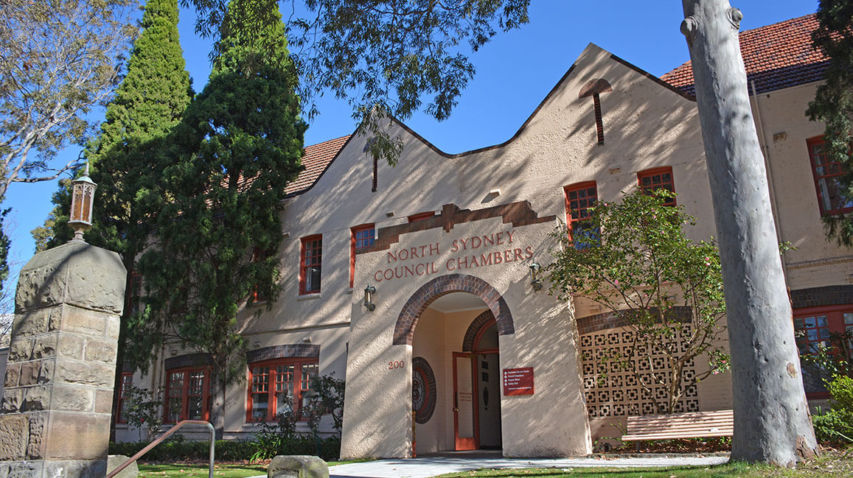
Two academics have questioned whether the Independent Pricing and Regulatory Tribunal’s approval of North Sydney Council’s 52.66% cumulative rate rise was reached using a financial modelling process consistent with NSW risk-management requirements.
Dr Ilene Chen and Professor Sheng-Beng Wang argue that North Sydney Council’s financial forecasts and the Independent Pricing and Regulatory Tribunal’s (IPART) assessment relied on deterministic, or “static”, modelling that did not adequately test what would happen if inflation, interest rates, wages or other costs departed from forecast assumptions.
Their independent audit says the modelling supporting the special variation treated key variables such as inflation, refinancing rates and infrastructure costs as fixed over the forecast period, an approach they say “creates a false illusion of structural solvency”.
The pair say the issue is not simply whether IPART reached the right or wrong financial conclusion, but whether the methodology used to reach that conclusion was consistent with the risk-management framework applying to NSW public-sector decision-making.
“Is IPART prepared to publicly affirm that its core modelling assumption — zero compounding inflation, zero interest-rate rises, zero CPI/WPI volatility, and zero climate risk — constitutes a mathematically sound and legally compliant basis for regulatory determinations,” they ask in their latest correspondence.
They also ask how IPART reconciles its approach with what they describe as a requirement for “dynamic, risk-informed decision-making”, arguing that deterministic forecasts which do not quantify uncertainty may be inconsistent with that standard.
Their argument draws heavily on the NSW Treasury Risk Management Toolkit, which they quote as requiring risk frameworks to be “dynamic, iterative, responsive to change, and use the best available information”. They contend IPART’s use of static, zero-shock modelling is inconsistent with those principles.
Chen is described in the correspondence as an independent statistician and bioinformatics scientist with a PhD in electrical and information engineering from the University of Sydney, along with a master’s degree in statistics and a bachelor’s degree in mathematics and statistics. Wang is a professor in the Department of Business and Management at Chang Gung University in Taiwan and is listed as holding a Stanford University PhD in mathematics specialising in optimisation and operations research, as well as master’s degrees in economics and management science.
Their North Sydney audit uses a 10,000-iteration Monte Carlo simulation to model a wider range of financial outcomes. It estimates a 23.58% probability that North Sydney Council would return to a structural operating deficit by 2028-29, despite the approved rate increase.
The academics argue this does not mean a deficit is certain, but that a single-point forecast may give decision-makers and ratepayers an incomplete picture of the range of possible outcomes.
Chen and Wang have also mounted a similar challenge to the modelling behind Northern Beaches Council’s special rate variation. Their separate audit estimates a 99.78% probability of a structural operating deficit by year 10 under its baseline stochastic scenario, compared with what it says was a positive 7.8% operating performance ratio in IPART’s deterministic forecast.
The pair are now asking IPART to explain whether its methodology complied with the relevant NSW risk standards and, if not, whether the determinations should be reconsidered.
“Given that IPART has approved rate increases based on models that breach NSW law and international standards, what steps will IPART take to remedy these unlawful determinations,” they ask, also raising the possibility of refunds or compensation for affected ratepayers.
The contention that the determinations were unlawful is made by Chen and Wang and has not been independently established.
Their correspondence has been distributed far beyond the regulator. It was copied to local government minister Ron Hoenig, members of the NSW Parliament’s Customer Service and Local Government committee, North Sydney and Northern Beaches councils, senior Monash University officials, local precinct groups, residents’ associations, business chambers and media outlets.
In North Sydney, recipients included the Combined Precincts Committee, Waverton, Bay, Brightmore, Hayes-Kurraba, Kirribilli, Neutral, Harrison-Bennett and Stanton precincts, as well as the North Sydney Business Chamber and the North Sydney Sun.