 16°C |
Tuesday September 22, 2026
16°C |
Tuesday September 22, 2026 
29 April 2025
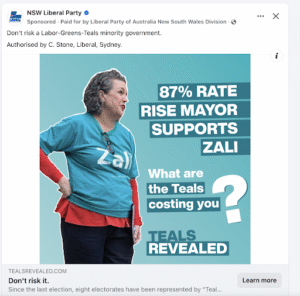
The battle over North Sydney Council’s proposed 87% rate rise has spilled into federal politics, with the Liberal Party weaponising the issue against Warringah independent MP Zali Steggall.
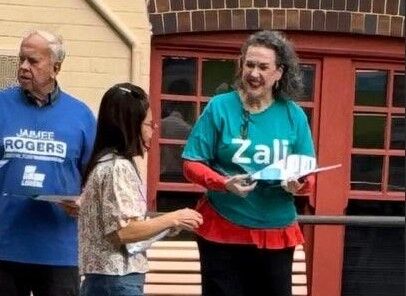
The federal Liberals are circulating advertisements showing North Sydney mayor Zoë Baker campaigning for Steggall at a North Sydney pre-poll booth, accusing Steggall of allying with a “87% rate rise mayor.” The ads form part of a broader Liberal effort to link federal independents to controversial local issues ahead of the Saturday federal election.
Steggall endorsed Baker’s Real Independents group at the September 2024 North Sydney Council elections, describing her relationship with the mayor as a “strong working relationship” and calling for support to “keep the council community-focused.”
The political row overshadowed North Sydney Council’s meeting last night, where Baker warned that without financial repair in the form of increased revenue, the council could face bankruptcy.
“This is about doing nothing and ending up in administration or bankruptcy,” Baker said, accusing some councillors of “wilfully misinterpreting” council’s financial repair plans or misunderstanding how local government operates.
Council voted to place its draft four-year delivery program and annual operational plan on public exhibition, despite strong opposition from Liberal councillors Efi Carr, Jessica Keen and independent James Spenceley.
Carr said she would vote against the draft program, arguing: “The community has rejected the informing strategies, has rejected the asset management plan, and has rejected the special rate variation. I’m not sure what response is expected from the community at this stage.”
Keen added: “It is the role of the council general manager to suggest options outside of a rate rise. Councillors were given no other options other than an enormous special rate variation to consider.”
Spenceley said it was “entirely shocking” that council had no backup plan if the Independent Pricing and Regulatory Tribunal rejects or scales back the rate rise, calling the situation “poor financial management” and “poor planning.”
Baker responded that council was legally obliged to proceed and had already flagged which projects would be delayed or cancelled without the extra funding. “We are doing the terrible cleanup work of the legacy of absolute ad hockery and financial recklessness that we have inherited,” she said.
Councillor MaryAnn Beregi, who moved both the delivery and strategic plan motions, criticised opponents for wanting to deny the community a say. “We can’t delay it,” she said. “By all means, if you are happy not to allow the community to have their say, that’s fine. That’s not the way I operate.”
Council also adopted its draft community strategic plan for public exhibition, over further objections from Carr, Keen and Spenceley, who argued the plan was flawed because of its links to the special rate variation.
Spenceley said informing strategies were developed without giving residents context about future costs. “There was no concept of: if you would like these strategies, your rates will go up,” he said.
Baker strongly rejected that argument, calling it “incorrect,” and emphasising that financial implications were clearly communicated throughout the consultation.
The draft plan received a big setback earlier this month when it was rejected by a vote of the Combined Precincts Committee of North Sydney residents.
Council must adopt its final delivery program, operational plan and community strategic plan by 30 June, in line with state government legislative requirements.
Steggall has previously expressed sympathy with North Sydney’s ratepayers over the proposed rise but also said the issue was complex, linking it to actions from other levels of government and climate change.
In February, she described the 87% increase as “incredibly high” and “distressing,” but urged residents to understand the broader context. “It’s really important to be factual about this problem,” she said. “There’s been a shifting of responsibility onto local government of a lot of expenses from state governments and federal governments, and it ends up being local governments that are really left holding the bag — and ultimately it’s residents.” She cited cost-shifting pressures such as the cost for climate risk management, arguing that “the model needs challenge” and warning that councils face an “unsustainable” financial burden. However she also indicated it was possible she could lobby the federal government for additional funds to help pay for the Olympic Pool renovation, which is a major cause of the council’s financial issues.